SkyBound
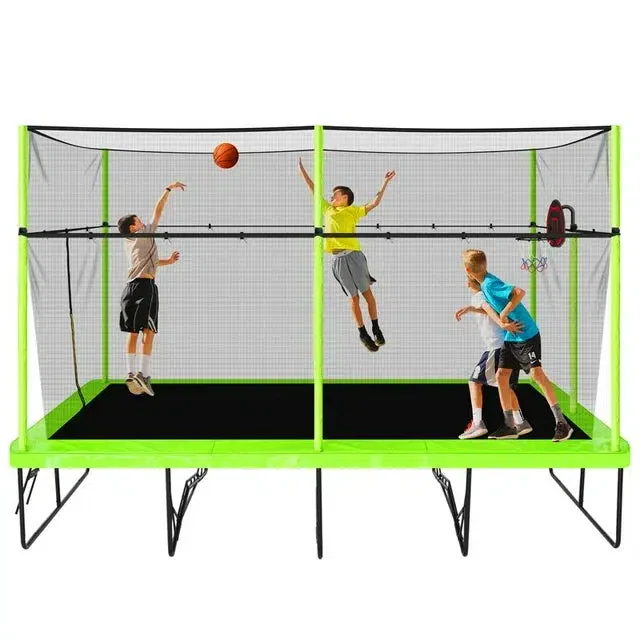
AltitudeX 10ft x 17ft Gymnastics Rectangle Trampoline - Green
Coil springs · 10ft×17ft
From $1,300


SkyBound and ACON are both coil-spring trampoline brands sold online, but they sit in completely different tiers. ACON builds for serious, sustained jumping backed by long warranties; SkyBound covers the family-backyard use case at a fraction of the cost.
ACON's range covers the Air series rounds ($899–$1,599) and the HD and X rectangles ($1,899–$3,999) aimed at gymnasts and serious jumpers, with higher spring counts and heavy-gauge frames. Warranty coverage is 10 years on the frame and 5 years on the mat and springs. ACON recommends around a 300 lb jumper limit and doesn't publish a hard weight cap on most models.
SkyBound started in 2009 as a replacement-parts supplier before launching its own trampolines, and its range runs from budget coil rounds through rectangles to a springless line using bungee cords and fiberglass rods. Frame coverage is 5 years on nearly every line, with mainstream rounds rated 330 lb per jumper and prices mostly between $150 and $700.
Affiliate disclosure: This page contains affiliate links and we may earn a commission on purchases. As an Amazon Associate we earn from qualifying purchases.
Promo code available
Use code BOUNCE for up to $150 off at ACON.
SkyBound
Coil springs · 10ft×17ft
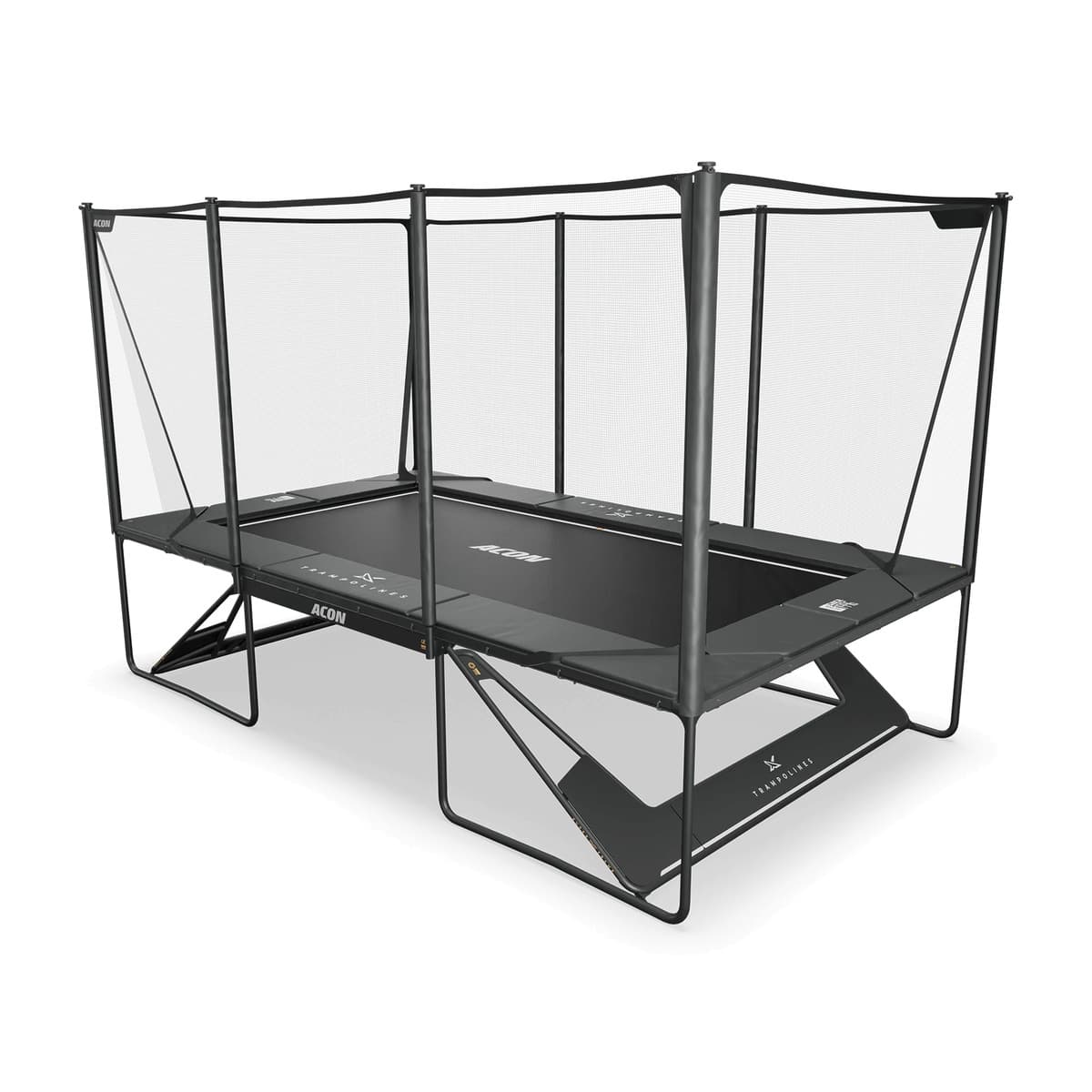
ACON
Coil springs (Performance Springs) · 17ft
Spec table key takeaways
| Specification | SkyBoundSkyBound AiryBounce Pro Trampoline 13ft13ft | SkyBoundSkybound 8ft×12ft Rectangular trampoline8ft×12ft | SkyBoundSkyBound AiryBounce 10ft×17ft Trampoline10ft×17ft | SkyBoundAltitudeX 10ft x 17ft Gymnastics Rectangle Trampoline - Green10ft×17ft | SkyBoundSkyLift Curved Pole Trampoline - 6ft6ft | SkyBoundSkyBound 6ft L-Shaped Legs Trampoline6ft | SkyBoundSkyLift Curved Pole Trampoline - 8ft8ft | SkyBoundSkyBound 8ft L-Shaped Legs Trampoline8ft | ACONACON 13 HD PRO Rectangular Trampoline with Net and Ladder13 HD | ACONACON 16 HD PRO Rectangular Trampoline with Net and Ladder16 HD | ACONACON X 17ft Rectangular Trampoline with Net and Ladder17ft | ACONACON Air 6ft Round Trampoline6ft | ACONACON Air 10ft Round Trampoline with Standard Net and Ladder10ft | ACONACON Air 12ft Round Trampoline with Safety Net and Ladder, GEN 2.012ft | ACONACON Air 14ft Round Trampoline with Safety Net and Ladder, GEN 2.014ft | ACONACON Air 15ft Round Trampoline with Safety Net and Ladder, GEN 2.015ft |
|---|---|---|---|---|---|---|---|---|---|---|---|---|---|---|---|---|
| Size | 13ft | 8ft×12ft | 10ft×17ft | 10ft×17ft | 6ft | 6ft | 8ft | 8ft | 13 HD | 16 HD | 17ft | 6ft | 10ft | 12ft | 14ft | 15ft |
| Shape | — | Rectangle | Rectangle | Rectangle | Round | Round | Round | Round | Rectangle | Rectangle | Rectangle | Round | Round | Round | Round | Round |
| Max diameter | 156" | 144.1" | 204" | 204" | 72" | 72" | 96" | 96" | 156" | 192" | 204" | 72" | 120" | 144" | 168" | 180" |
| Overall length | 156" | 144.1" | 204" | 204" | 72" | 72" | 96" | 96" | — | 204" | 204" | 72" | 120" | 144" | 168" | 180" |
| Overall width | 156" | 106.3" | 120" | 120" | 72" | 72" | 96" | 96" | — | 120" | 120" | 72" | 120" | 144" | 168" | 180" |
| Total height | — | 96.1" | — | — | 79" | — | 82" | — | — | 132" | — | — | — | — | 110.4" | — |
| Mat height | — | — | — | — | — | — | — | — | 42" off ground | 42" off ground | — | 18" off ground | 31.5" off ground | 35" off ground | 35" off ground | 35" off ground |
| Spring system | Coil springs (AiryBounce Pro) | Coil springs | Coil springs (AiryBounce) | Coil springs | Coil springs (SkyLift) | Coil springs | Coil springs (SkyLift) | Coil springs | Coil springs (Performance Springs) | Coil springs (Performance Springs) | Coil springs (Performance Springs) | coil springs | Coil springs (Air Series) | Coil springs (Air Series) | Coil springs (Air Series) | Coil springs (Air Series) |
| Spring count | — | — | — | — | — | — | — | — | 108 | 140 | — | 48 | 64 | 80 | 96 | 110 |
| Spring length | — | — | — | — | — | — | — | — | 10" | 10" | — | 7" | 7" | 8.5" | 8.5" | 8.5" |
| Max single user | — | — | — | — | 220 lb | — | 220 lb | — | No published limit (≈300 lb rec.) | No published limit (≈300 lb rec.) | No published limit (≈300 lb rec.) | No published limit (≈300 lb rec.) | No published limit (≈300 lb rec.) | No published limit (≈300 lb rec.) | No published limit (≈300 lb rec.) | No published limit (≈300 lb rec.) |
| Frame material | Galvanized and powder-coated steel | Diamond-shaped steel frame | Galvanized and powder-coated steel | Rust-proof heavy-duty galvanised steel frame | Steel frame with curved fiberglass rods | L-shaped leg frame | Steel frame with curved fiberglass rods | L-shaped leg frame | Galvanized and powder-coated steel | Galvanized and powder-coated steel | Galvanized and powder-coated steel | Galvanized and powder-coated steel | Galvanized and powder-coated steel | Galvanized and powder-coated steel | Galvanized and powder-coated steel | Galvanized and powder-coated steel |
| Frame tube dia. | — | — | — | — | — | — | — | — | 2.4" | 2.4" | 2" | 1.5" | 2" | 2" | 2" | 2" |
| Mat material | — | — | — | — | — | — | — | — | UV-treated cross-sewn polypropylene | UV-treated cross-sewn polypropylene | UV-treated cross-sewn polypropylene | — | UV-treated cross-sewn polypropylene | UV-treated cross-sewn polypropylene | UV-treated cross-sewn polypropylene | UV-treated cross-sewn polypropylene |
| Net material | — | — | — | — | PVC-ring/zipper-secured safety net | — | PVC-ring/zipper-secured safety net | — | — | — | — | — | — | — | — | — |
| Padding material | — | — | Widened thickened foam spring cover | — | — | — | — | — | — | — | — | — | — | — | — | — |
| Standard details | ASTM F963; ASTM F381; ASTM F2225 | ASTM F963; ASTM F381; ASTM F2225 | ASTM F963; ASTM F381; ASTM F2225 | ASTM F963; ASTM F381; ASTM F2225 | ASTM F963; ASTM F381; ASTM F2225 | ASTM F963; ASTM F381; ASTM F2225 | ASTM F963; ASTM F381; ASTM F2225 | ASTM F963; ASTM F381; ASTM F2225 | ASTM | ASTM | ASTM | CE / ASTM certified weight limit stated by ACON | ASTM | ASTM | ASTM | ASTM |
| Warranty — frame | 5 yr | 5 yr | 5 yr | 10 yr | 5 yr | 5 yr | 5 yr | 5 yr | 10 yr | 10 yr | 10 yr | — | 10 yr | 10 yr | 10 yr | 10 yr |
| Warranty — mat | 3 yr | — | 3 yr | 2 yr | 2 yr | — | 2 yr | — | 5 yr | 5 yr | 5 yr | — | 5 yr | 5 yr | 5 yr | 5 yr |
| Warranty — springs | 3 yr | — | 3 yr | 2 yr | 2 yr | — | 2 yr | — | 5 yr | 5 yr | 5 yr | — | 5 yr | 5 yr | 5 yr | 5 yr |
| Warranty — net | 1 yr | — | 1 yr | 1 yr | 2 yr | — | 2 yr | — | 1 yr | 1 yr | 1 yr | — | 1 yr | 1 yr | 1 yr | 1 yr |
| Price | $560 | $630 | $1,000 | $1,300 | $210 | $149 | $270 | $170 | $2,199 | $2,999 | $3,999 | — | $899 | $1,199 | $1,399 | $1,599 |
Shared across all models
Take the quiz and get a tailored trampoline recommendation based on yard size, budget, safety priorities, and who will be using it.
Take the quiz →